


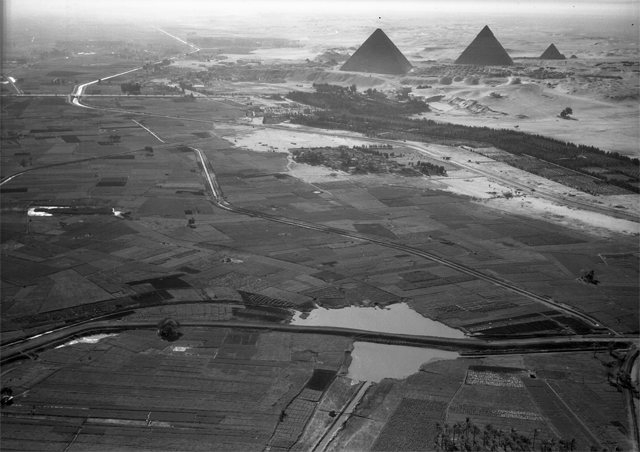
Hey timeline kin, it’s a blistering morning in 2550 BC on the Giza plateau, and the desert sand is already shimmering under the relentless Egyptian sun. Thousands of workers, their bodies glistening with sweat, haul massive blocks of limestone up a long, sloping ramp.
The air rings with the rhythmic chant of overseers, the creak of wooden sledges, and the distant roar of the Nile. At the center of it all rises a structure so enormous it seems to defy human capability — layer upon layer of precisely cut stone climbing toward the sky. A pharaoh named Khufu watches from a shaded pavilion as his eternal resting place, the Great Pyramid of Giza, slowly takes shape. In that moment, the world’s most iconic monument was born.This is the story of the pyramids — not just tombs of stone, but symbols of human ambition, engineering genius, and the ancient Egyptian belief in eternity. For more than 4,500 years, they have stood on the edge of the desert, silent witnesses to the rise and fall of civilizations, and still capable of inspiring awe in every generation that gazes upon them.
The Dawn of Pyramid Building – From Mastabas to Step Pyramids (c. 3100–2580 BC)
The story of the pyramids begins long before the Great Pyramid. Early Egyptian kings were buried in simple rectangular mud-brick structures called mastabas. Over time, these flat-roofed tombs grew larger and more elaborate. Around 2630 BC, the visionary architect Imhotep took a revolutionary step for his king, Djoser. Instead of a single mastaba, he stacked six of them on top of each other, each smaller than the one below, creating the Step Pyramid at Saqqara — the world’s first large-scale stone monument. It stood over 200 feet tall and marked the beginning of the pyramid age.
The Golden Age – The True Pyramids of Giza (c. 2580–2500 BC)
The greatest pyramids were built during the Fourth Dynasty. The most famous is the Great Pyramid of Giza, constructed for Pharaoh Khufu (also known as Cheops) around 2550 BC. It originally stood 481 feet (146.6 meters) tall and was built using an estimated 2.3 million limestone blocks, some weighing as much as 80 tons. Its sides are aligned almost perfectly with the cardinal directions, and its base is level to within a fraction of an inch — an astonishing feat of engineering even by today’s standards.
Two other major pyramids followed on the same plateau:
- The Pyramid of Khafre (Khufu’s son), which still retains some of its original smooth casing stones at the top.
- The smaller Pyramid of Menkaure.
Together with the Great Sphinx, these structures form one of the most iconic landscapes in human history. Contrary to popular myth, they were not built by slaves. Recent archaeological evidence shows that the workers were skilled, well-fed Egyptians who lived in nearby workers’ villages and took great pride in their labor.
Why Were They Built?
The pyramids were far more than tombs. They were part of a vast religious and astronomical complex designed to ensure the pharaoh’s safe journey to the afterlife and his eternal life among the gods. The ancient Egyptians believed the pharaoh was a living god whose spirit (ka) would continue to protect Egypt after death. The pyramid served as a ladder to the heavens, its smooth sides representing the rays of the sun.
The precision of their construction still amazes engineers today. The Great Pyramid’s base is a nearly perfect square, and its sides rise at an angle of 51°50'40" — a slope so exact that the structure’s orientation to true north is accurate to within 3/60th of a degree.
The Decline & Later Pyramids
After the Fourth Dynasty, pyramid building continued but on a smaller and less precise scale. Economic strain, political instability, and the growing power of regional governors led to smaller, poorer-quality pyramids. By the end of the Old Kingdom (around 2181 BC), the great age of pyramid construction had largely ended. Later rulers, especially in the Middle and New Kingdoms, preferred hidden rock-cut tombs in the Valley of the Kings to avoid tomb robbers.
Pyramids of Giza: Historical Legacy and Cultural Significance
The pyramids of ancient Egypt, particularly the Great Pyramid of Giza, have stood for over 4,500 years as some of the oldest surviving large-scale human-made structures. Built during the Old Kingdom, they reflect advanced engineering, centralized state power, and complex religious beliefs centered on the afterlife and divine kingship.
In 2026, these monuments continue to attract global attention as key archaeological and cultural heritage sites. Their scale, precision, and symbolic design demonstrate how ancient Egyptian civilization integrated architecture, astronomy, and theology. More than monumental tombs, the pyramids represent a lasting record of early human innovation and the enduring quest to understand life, death, and cosmic order.
What part of the pyramids’ story stays with you?
The vision of Imhotep stacking mastabas to create the first Step Pyramid?
The sheer scale of Khufu’s Great Pyramid rising from the desert floor?
The precision of the alignment with the stars and cardinal points?
Or the quiet realization that these ancient structures have outlived empires, languages, and entire ways of life?
The vision of Imhotep stacking mastabas to create the first Step Pyramid?
The sheer scale of Khufu’s Great Pyramid rising from the desert floor?
The precision of the alignment with the stars and cardinal points?
Or the quiet realization that these ancient structures have outlived empires, languages, and entire ways of life?
Write whatever is on your mind below. I read every word.
Books that shaped how I see the pyramids:
Books that shaped how I see the pyramids:
- The Complete Pyramids by Mark Lehner (the definitive modern reference)
- The Pyramids by Miroslav Verner
- Voyages of the Pyramid Builders by Robert M. Schoch
- Ancient Egypt by David P. Silverman (broader context)
Reliable sources I leaned on for key facts:
- Giza Plateau Mapping Project – Mark Lehner
- The British Museum – Ancient Egypt
- Britannica – Pyramids of Giza
- Smithsonian – How the Pyramids Were Built
- Egyptian Ministry of Tourism & Antiquities


Comments