


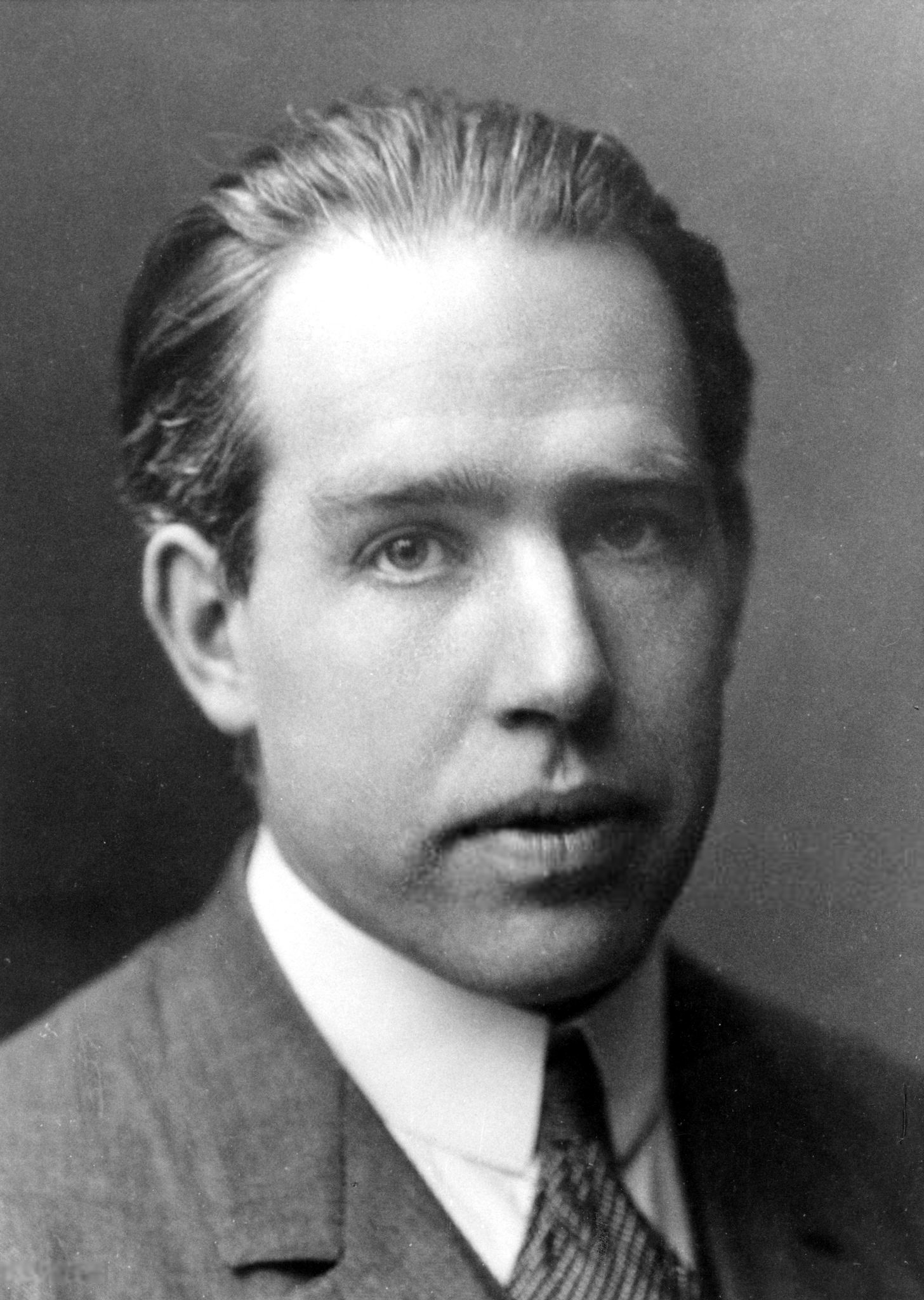
Hey timeline kin, in the quiet streets of Copenhagen during the winter of 1913, a young Danish physicist sat at his desk, pencil in hand, staring at a sheet of paper covered with equations. He was trying to solve one of the greatest mysteries of the age — why atoms were stable, why electrons didn’t spiral into the nucleus as classical physics predicted. Suddenly, the pieces fell into place. He saw a new model of the atom, one where electrons occupied specific orbits, jumping between them in discrete steps. That moment of insight would revolutionize our understanding of the universe and lay the foundation for quantum mechanics.
This is the story of Niels Bohr — the Danish physicist who peered into the heart of matter and helped unlock the secrets of the atomic world, a man whose ideas would shape the 20th century and beyond.
Early Life and the Spark of Scientific Curiosity
A Mind Shaped by Copenhagen
Niels Henrik David Bohr was born on October 7, 1885, in Copenhagen, Denmark. He grew up in an intellectually stimulating environment. His father, Christian Bohr, was a professor of physiology, and his mother came from a wealthy Jewish family with strong academic traditions. The Bohr household was a place of lively discussion, where science, philosophy, and culture were freely debated.
Niels Henrik David Bohr was born on October 7, 1885, in Copenhagen, Denmark. He grew up in an intellectually stimulating environment. His father, Christian Bohr, was a professor of physiology, and his mother came from a wealthy Jewish family with strong academic traditions. The Bohr household was a place of lively discussion, where science, philosophy, and culture were freely debated.
From a young age, Niels showed exceptional intellectual ability. He excelled in mathematics and physics at school and university. He earned his doctorate from the University of Copenhagen in 1911 with a thesis on the electron theory of metals. But it was during a postdoctoral year in England that his most important work would begin.
The Bohr Model of the Atom: A New Understanding of Matter
Solving the Riddle of the Atom
In 1912, Bohr went to work with Ernest Rutherford at the University of Manchester. Rutherford had recently proposed his nuclear model of the atom — a tiny, dense nucleus surrounded by orbiting electrons. However, this model had a serious problem: according to classical physics, the electrons should spiral into the nucleus, making atoms unstable.
In 1912, Bohr went to work with Ernest Rutherford at the University of Manchester. Rutherford had recently proposed his nuclear model of the atom — a tiny, dense nucleus surrounded by orbiting electrons. However, this model had a serious problem: according to classical physics, the electrons should spiral into the nucleus, making atoms unstable.
Bohr solved this problem by introducing quantum ideas. He proposed that electrons could only occupy certain discrete orbits, and that they could jump between these orbits by absorbing or emitting specific amounts of energy. This explained the stability of atoms and the specific wavelengths of light emitted by elements.
Bohr’s model was revolutionary. It combined classical physics with the new quantum ideas of Max Planck and Albert Einstein. It explained the spectral lines of hydrogen and provided a framework for understanding atomic structure. For this work, Bohr was awarded the Nobel Prize in Physics in 1922.
The Copenhagen Interpretation and Quantum Philosophy
The Heart of Quantum Mechanics
In the 1920s, Bohr became the central figure in the development of quantum mechanics. At his institute in Copenhagen, he gathered some of the brightest minds in physics — Werner Heisenberg, Wolfgang Pauli, Max Born, and others. Together, they developed what became known as the Copenhagen Interpretation of quantum mechanics.
In the 1920s, Bohr became the central figure in the development of quantum mechanics. At his institute in Copenhagen, he gathered some of the brightest minds in physics — Werner Heisenberg, Wolfgang Pauli, Max Born, and others. Together, they developed what became known as the Copenhagen Interpretation of quantum mechanics.
This interpretation emphasized the role of measurement and the probabilistic nature of quantum phenomena. It introduced concepts like complementarity — the idea that particles can behave as both waves and particles depending on how they are observed. Bohr’s philosophical approach to quantum mechanics, with its emphasis on the limits of classical concepts, remains influential to this day.
The Manhattan Project and Ethical Dilemmas
Science in the Shadow of War
When World War II broke out, Bohr initially remained in Denmark. However, as the Nazis occupied the country, he became involved in the resistance. In 1943, he escaped to Sweden and then to England, where he joined the British contingent of the Manhattan Project.
When World War II broke out, Bohr initially remained in Denmark. However, as the Nazis occupied the country, he became involved in the resistance. In 1943, he escaped to Sweden and then to England, where he joined the British contingent of the Manhattan Project.
Bohr’s role in the project was complex. He contributed scientific expertise but also raised profound ethical questions about the use of atomic weapons. He advocated for international control of nuclear technology and warned about the dangers of an arms race. His efforts to promote openness and cooperation among scientists were ahead of their time but largely ignored in the tense atmosphere of the Cold War.
Post-War Leadership and the Peaceful Atom
A Voice for International Cooperation
After the war, Bohr returned to Denmark and continued his scientific work. He became a leading advocate for the peaceful use of atomic energy and for international scientific cooperation. He helped establish CERN and played a key role in the creation of the European scientific community.
After the war, Bohr returned to Denmark and continued his scientific work. He became a leading advocate for the peaceful use of atomic energy and for international scientific cooperation. He helped establish CERN and played a key role in the creation of the European scientific community.
Bohr’s later years were marked by his efforts to promote dialogue between East and West during the Cold War. He believed that science could serve as a bridge between nations and that openness was essential for both scientific progress and world peace.
Later Years and Philosophical Reflections
Wisdom from a Lifetime of Discovery
In his final years, Bohr continued to think deeply about the philosophical implications of quantum mechanics. He remained active in science and public life until his death on November 18, 1962. His influence extended far beyond physics, shaping fields from biology to philosophy.
In his final years, Bohr continued to think deeply about the philosophical implications of quantum mechanics. He remained active in science and public life until his death on November 18, 1962. His influence extended far beyond physics, shaping fields from biology to philosophy.
Bohr’s approach to science — combining rigorous experimental work with deep philosophical reflection — remains a model for scientists today. He showed that the greatest discoveries often come from asking fundamental questions about the nature of reality.
Niels Bohr's Enduring Legacy in Physics and Beyond
A Giant of 20th Century Science
Niels Bohr’s contributions to physics are immeasurable. His model of the atom provided the foundation for quantum mechanics. His leadership at the Copenhagen Institute created a center of scientific excellence that trained generations of physicists. His philosophical insights into the nature of measurement and complementarity continue to influence scientific thinking.
Niels Bohr’s contributions to physics are immeasurable. His model of the atom provided the foundation for quantum mechanics. His leadership at the Copenhagen Institute created a center of scientific excellence that trained generations of physicists. His philosophical insights into the nature of measurement and complementarity continue to influence scientific thinking.
Beyond science, Bohr’s life offers lessons about the responsibility of scientists, the importance of international cooperation, and the value of maintaining intellectual humility in the face of the universe’s mysteries.

Looking Back at the Physicist Who Unlocked the Atomic World
Niels Bohr's legacy reaches far beyond the model of the atom that bears his name. His ideas helped bridge the gap between classical physics and the strange, counterintuitive world of quantum mechanics, forever changing how humanity understands matter, energy, and the fundamental laws of nature. Although later theories expanded upon his work, Bohr's insights remain a cornerstone of modern physics and continue to shape scientific education around the world.
Yet Bohr believed that science was about more than solving equations or making discoveries. He argued that every scientific breakthrough should be accompanied by humility, open dialogue, and a sense of responsibility toward humanity. Having witnessed both the extraordinary promise and the destructive potential of nuclear physics, he became a passionate advocate for international cooperation and the peaceful use of scientific knowledge.
More than half a century after his death, Bohr's influence can still be found in laboratories, classrooms, and technologies that power the modern world. His story reminds us that the greatest discoveries do more than explain the universe—they challenge us to think more deeply about our place within it and how we choose to use the knowledge we gain.
What part of Niels Bohr’s story stays with you?
His revolutionary model of the atom?
The philosophical depth of the Copenhagen Interpretation?
His efforts to promote peace during the Cold War?
Or how a Danish physicist helped unlock the secrets of the atomic world?
His revolutionary model of the atom?
The philosophical depth of the Copenhagen Interpretation?
His efforts to promote peace during the Cold War?
Or how a Danish physicist helped unlock the secrets of the atomic world?
Write whatever is on your mind below. I read every word.
Recommended Reading:
Recommended Reading:
- Niels Bohr: A Very Short Introduction — J. L. Heilbron
- Niels Bohr's Times — Abraham Pais
- Niels Bohr: His Life and Work as Seen by His Friends and Colleagues — S. Rozental
- The Making of the Atomic Bomb — Richard Rhodes
- Quantum: Einstein, Bohr and the Great Debate About the Nature of Reality — Manjit Kumar
Reliable sources I leaned on for key facts:
- Niels Bohr Institute - Official Site
- Niels Bohr – Nobel Prize (Official Biography)
- Niels Bohr – Encyclopaedia Britannica
- Nobel Prize – The Bohr Atomic Model
- Atomic Heritage Foundation – Niels Bohr
Related Articles
- The History of Penicillin: How Alexander Fleming’s Accidental Discovery Saved Millions
- The Secret Behind Newton’s Apple: The Story of Gravity That Changed Science
- The History of ARPANET: How the Cold War Gave Birth to the Internet
- The History of the Steam Engine: How James Watt Powered the Industrial Revolution
- The History of the Telegraph: How Samuel Morse Connected the World


Comments