


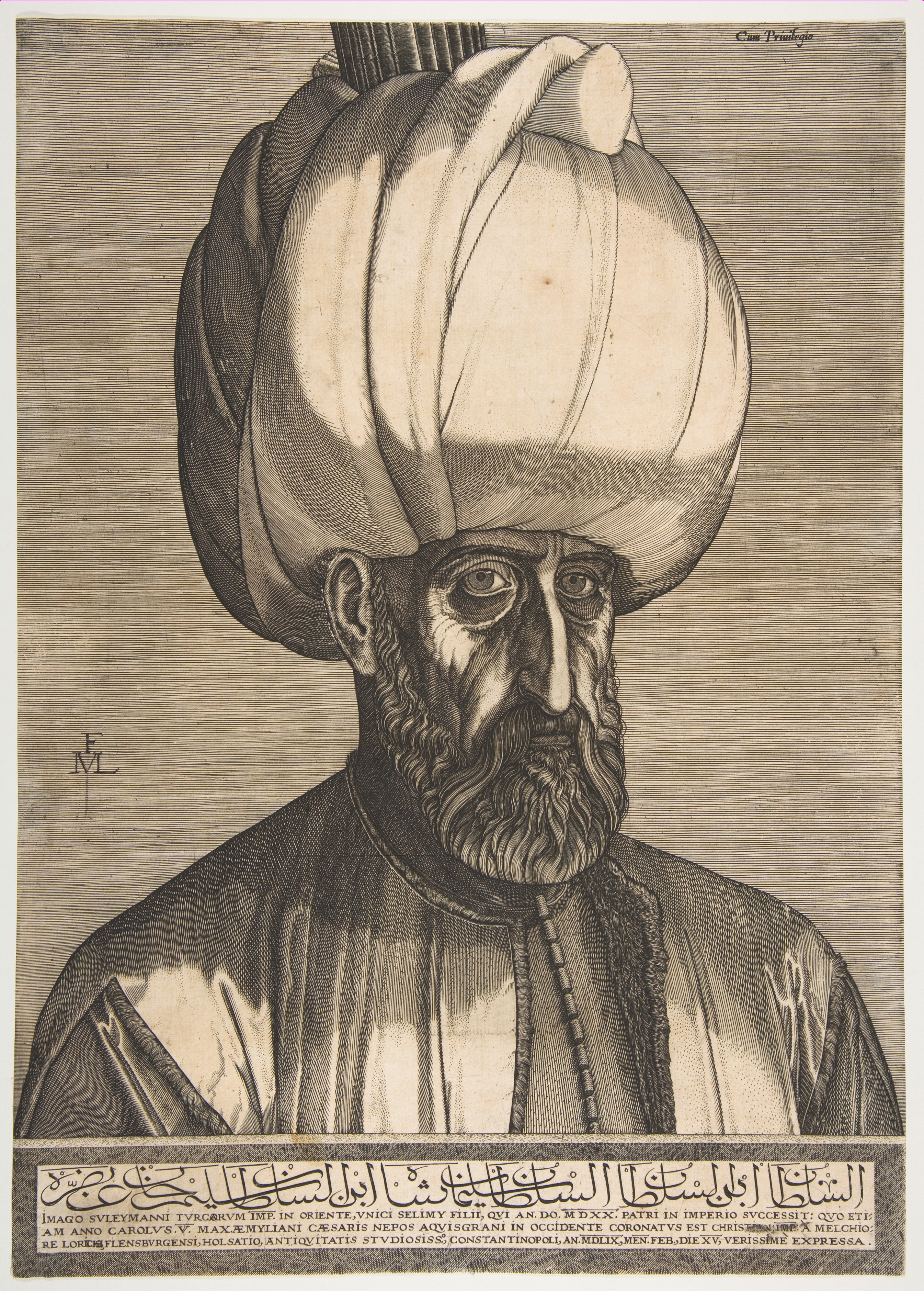
Hey timeline kin, stand on the deck of a Venetian galley in the spring of 1521, the sea glittering under a low sun, and watch the horizon fill with crimson sails. The banners snap like whips in the wind; the oars dip in perfect time. At the center of the fleet stands a tall, bearded man in a kaftan of dark green silk embroidered with gold thread.
He is thirty-six years old, newly ascended to the throne, and already the Venetians are calling him “the Magnificent” behind their hands—not because they love him, but because they fear what he might do next. His name is Süleyman, the tenth sultan of the Ottoman house. In the next forty-six years, he will lead his armies across three continents, write laws that still influence courts in Istanbul and Sarajevo, commission mosques that look as though heaven itself decided to touch earth, and turn a sprawling, multi-ethnic empire into something that felt—for a while—like the center of the world.This is not the usual parade of battles and dates. This is the story of how one man, in the space of a single lifetime, took an already formidable state and made it feel inevitable. Süleyman did not inherit a sleeping giant; he inherited a restless, talented machine that had already conquered Constantinople and Belgrade. What he added was rhythm, vision, and an almost obsessive sense of order. For many people who lived under his rule—and for many who study him now—he remains the benchmark of what an early-modern ruler could be when intelligence, discipline, and overwhelming military power came together in one person.
The Young Sultan: Learning the Throne (1520–1523)
Suleiman the Magnificent’s European Campaigns (Belgrade, Rhodes, Mohács) 1521–1526
The Eastern & Southern Fronts: Tabriz, Baghdad, Yemen (1533–1555)
Why Suleiman Was Called “Kanuni” (The Lawgiver) – Kanunî: Reordering Society (1520s–1560s)
Patron of Arts & Architecture – The Builder of Magnificence
- The Süleymaniye Mosque complex in Istanbul (1550–1557) is still one of the most harmonious mosque ensembles in the world.
- The Selimiye Mosque in Edirne (1568–1575) — Sinan’s own masterpiece, which he called his most perfect work.
- Restorations in Mecca, Medina, Jerusalem, and Damascus.
Succession Crisis and Family Tragedy Under Suleiman: Family Tragedy & Succession Crisis (1540s–1566)
The Long Afterlife of a Sultan: Legacy of Suleiman the Magnificent
Suleiman the Magnificent ruled the Ottoman Empire for forty-six years (1520–1566), the longest reign of any Ottoman sultan and widely considered the empire’s golden age. At its peak under his rule, the empire stretched from Hungary in Central Europe to Yemen in Arabia, and from Algeria in North Africa to Iraq in the Middle East—making it one of the most powerful states in the 16th-century world.
His legacy was not only military expansion but also institutional strength. As “Kanunî” (The Lawgiver), he codified administrative and legal systems that shaped Ottoman governance for centuries, influencing law and taxation well into the 19th century. Architecturally, his patronage—especially through masterpieces like the Süleymaniye Mosque—defined the classical Ottoman style, leaving a lasting imprint on cities such as Istanbul and Edirne. His reign also fostered a cultural flourishing in poetry, calligraphy, and imperial art that continues to shape Turkish identity today.
However, Suleiman’s legacy was not without consequences. His later years were marked by a brutal succession crisis, including the execution of his son, Mustafa, and the rebellion of Bayezid. After his death, his successor Selim II inherited a vast but increasingly strained empire. Historians often link this period to the beginning of the so-called “Sultanate of Women,” when court politics and palace influence grew significantly. Continuous military campaigns had also stretched imperial finances, placing long-term pressure on the treasury and administration.
For many historians, the reign of Suleiman represents the high point of Ottoman political power, legal organization, and cultural achievement. The “Magnificent” era ended not because of immediate collapse, but because no later ruler could replicate his combination of military leadership, administrative control, and cultural patronage.
The teenage sultan who waited out his father’s favorites?
The builder who turned Istanbul into a permanent monument?
The father who executed his own sons?
Or the way his reign still feels like the moment the Ottoman story reached its most perfect balance before the long, slow descent?
Who was Suleiman the Magnificent?
Suleiman, I was the tenth Ottoman sultan, ruling from 1520 to 1566.
Why is he called Kanuni?
He earned the title “The Lawgiver” for codifying Ottoman law.
What did Suleiman conquer?
He expanded the empire into Hungary, Iraq, and North Africa.
Books that shaped how I see Süleyman’s reign:
- Suleiman the Magnificent by André Clot (vivid narrative, good on personality)
- The Imperial Harem by Leslie P. Peirce (essential for understanding Hürrem and court politics)
- Süleyman the Magnificent: Poet, Legislator, Conqueror by Esin Atil (focus on cultural patronage)
- The Ottoman Empire: The Classical Age 1300–1600 by Halil İnalcık (structural backbone of the state under Süleyman)
- Lords of the Horizons by Jason Goodwin (beautifully written popular history with strong Süleyman chapters)
- Encyclopædia Iranica – Süleyman I — detailed, peer-reviewed
- TDV İslâm Ansiklopedisi – Süleyman — Turkish academic foundation entry
- UNESCO World Heritage – Süleymaniye Mosque Complex — official site & architectural context
- Metropolitan Museum of Art – Ottoman Art under Süleyman — essays & images of manuscripts, ceramics, textiles
- Topkapı Palace Museum – Süleyman’s Reign → artifacts & court records
Recommended Articles
- The Ottoman Empire Explained: From Frontier State to Global Power – The full 600-year story of the empire Süleyman made legendary.
- Osman I and the Making of the Early Ottoman State – The founder who started what Süleyman perfected.
- How the Ottoman Empire Rose from a Small Frontier State to Global Power – The empire’s dramatic rise before its golden age.
- The Devşirme System and the Making of the Janissaries – The military machine that powered Süleyman’s conquests.
- The Sultanate of Women: Power and Intrigue in the Ottoman Harem – Powerful women in the Ottoman court during and after his reign.


Comments