


Hello timeline kin, Imagine waking up in a village along the Volga in the spring of 1921. Last autumn, some grain was still hidden under the floorboards. By winter, the seed grain was gone, the horses had been eaten, the cats had disappeared, and now the snow is melting, revealing bodies that were too weak to bury properly when they died months earlier.
Children with swollen bellies sit in doorways, too tired to cry. Adults barter rags and tools for a handful of grass or a dead bird. And somewhere in Moscow, officials are still arguing over whether to admit the famine exists or to keep exporting grain to prove the revolution is succeeding. The Russian famine of 1921–1922 (sometimes called the Povolzhye famine after the Volga region) killed between 5 and 6 million people, making it one of the worst peacetime disasters of the early 20th century. It wasn’t caused by drought alone, or war alone, or ideology alone. It was all three colliding at once: the aftermath of six years of world war, civil war, and foreign intervention; a severe drought in 1921; and Bolshevik policies that treated the countryside as a resource to be squeezed rather than people to be fed. This isn’t a detached overview or a timeline copied from somewhere else. It’s the longer, more human attempt to walk through how a country that had just survived a world war and a civil war could then let millions starve in plain sight, how ordinary people kept themselves and their families alive when there was almost nothing left, and what the famine revealed about the early Soviet state before Stalin’s even bigger catastrophes began.The Long War Before the Famine (1914–1921)
Russia entered World War I already fragile. By 1917, the army was disintegrating, the cities were starving, and the countryside was hoarding grain because the government paid worthless paper money. The February Revolution toppled the Tsar, but the Provisional Government kept fighting. The October Revolution brought the Bolsheviks to power, but they faced immediate civil war. The Civil War (1918–1922) was a period of chaos on a continental scale. Reds vs Whites vs Greens (peasant partisans) vs anarchists vs foreign intervention armies (Britain, France, Japan, USA, Czechoslovakia). Both sides requisitioned grain at gunpoint. The Bolsheviks called it “prodrazvyorstka” (food dictatorship)—they took whatever peasants had, often leaving nothing for planting next year. The Whites did the same when they controlled territory. Railroads were destroyed, trade collapsed, and seed grain was eaten or confiscated. By 1920, the countryside was exhausted. Livestock numbers had plummeted. Fields lay fallow. Then came the drought of 1921—the worst in decades across the Volga, Ural, and southern Urals regions.
1921–1922: The Famine Unfolds
The drought struck hardest in the Volga basin (Saratov, Samara, Simbirsk, Kazan provinces), the southern Urals, and parts of Ukraine and the North Caucasus. Grain harvests fell to 20–40% of normal. But the state kept demanding quotas. When villages had nothing left, brigades took roofs, tools, clothing—anything that could be sold. The first deaths came quietly in late 1921. By winter, entire villages were ghost towns. People ate:
- Grass, nettles, bark, acorns
- Leather boiled into glue.
- Dogs, cats, rats
- In the worst cases, human corpses (cannibalism was rare but documented in OGPU reports and survivor testimonies)
Children were abandoned at orphanages or railway stations because their parents could no longer feed them. Typhus and cholera spread through weakened bodies. Corpses lay in the streets until volunteers or soldiers buried them in mass graves. One small, haunting detail from survivor accounts: in Samara province, people began marking abandoned houses with white crosses on the doors so others wouldn’t waste time searching for food inside. The crosses spread like snowflakes across the steppe.
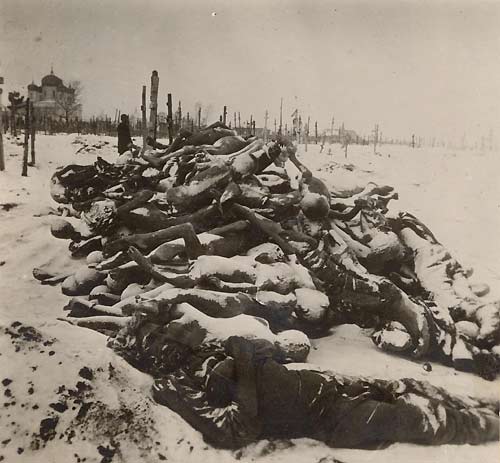
The Government Response – Denial, Delay, Then Help (1921–1922)
At first, the Bolshevik leadership denied the scale of the problem. Lenin and the Politburo feared admitting famine would undermine the image of the revolution. Grain exports continued into 1921 to pay for machinery. Internal reports were suppressed. In June 1921, Maxim Gorky wrote an open letter to the world begging for help. Herbert Hoover’s American Relief Administration (ARA) offered aid on condition of access and no political interference. The Soviet government reluctantly agreed in August 1921. ARA fed up to 10 million people at its peak, mostly children. Other organizations (Quakers, Red Cross) helped too. But the aid came late. The worst deaths occurred in winter 1921–1922 before large shipments arrived. And even with aid, thousands died every day in spring 1922.
Numbers & Human Scale
Estimates vary because records were poor and many deaths were never registered:
- Most scholars now converge on 5–6 million excess deaths across the Volga, Urals, and southern regions (Robert Conquest, R.W. Davies & Stephen Wheatcroft, Orlando Figes).
- Some Russian and Ukrainian historians argue up to 8–10 million when indirect deaths are included.
- Ethnic breakdown: Volga Germans, Tatars, Kazakhs, Russians, and Ukrainians all suffered, but Kazakhs were hit hardest in proportion (see the separate Asharshylyq in Kazakhstan that overlapped).
One in every five or six people in the hardest-hit provinces died. Entire villages vanished. Survivors ate seed grain, so the next harvest was even worse. It took years for the population to recover.
Why It Happened – Policy, Drought, and Ideology
The famine had three main causes:
- War & Civil War destruction — six years of requisitioning, fighting, and broken transport left the countryside with almost no reserves.
- Drought of 1921 — the immediate trigger.
- Bolshevik grain procurement — the state kept raising quotas even as reports of starvation arrived. Lenin himself wrote in late 1921 that the peasants “must be taught a lesson” and that grain must be taken “at any price.”
It wasn’t genocide in the narrow legal sense (no intent to destroy a specific ethnic group). Still, it was class-based mass killing: the regime saw peasants as a class enemy and was willing to let millions die to break their resistance.

Aftermath & Memory (1922–2026)
The famine ended in 1923, when rains returned, and aid began to flow. But the scars lasted generations. Survivors rarely spoke of it—fear of arrest kept mouths shut. Soviet textbooks called it a “natural disaster” or “kulak sabotage.” The word “Holodomor” is Ukrainian; in Russia and Kazakhstan, the events were long referred to simply as “the famine of 1921–1922” or “the hungry years.”
After the USSR collapsed, archives opened. In Russia, the famine is now acknowledged but minimized—often described as a shared tragedy of collectivization rather than a targeted crime. In Ukraine, the Volga famine is linked to the Holodomor as part of the same pattern.
In Kazakhstan, the Asharshylyq is remembered as a national trauma separate from but parallel to Ukraine’s experience.
In 2026, when people in the former Soviet space talk about resilience, many older Kazakhs, Tatars, or Volga Germans will quietly mention “those years” when there was nothing to eat and no one to ask for help. The memory isn’t loud, but it’s deep.
What part of this famine stays with you?
The scale of the suffering?
The way the state kept exporting grain while people ate grass?
The long silence that followed. Or how survivors rebuilt after losing almost everything?
The scale of the suffering?
The way the state kept exporting grain while people ate grass?
The long silence that followed. Or how survivors rebuilt after losing almost everything?
Write whatever is on your mind below.
I read every word.
I read every word.
Books that shaped how I understand the 1921–1922 famine:
- The Russian Famine of 1921–1922 by Bertrand M. Patenaude (detailed on ARA aid & politics)
- Years of Hunger: Soviet Agriculture 1931–1933 by R.W. Davies & Stephen G. Wheatcroft (context on earlier & later famines)
- The Harvest of Sorrow by Robert Conquest (broad look at collectivization famines, including 1921–1922)
- A History of the Volga Germans by Fred C. Koch (personal accounts from one affected group)
- Black Book of Communism by Stéphane Courtois et al. (controversial but contains famine statistics & documents)
Reliable sources I leaned on for key facts & numbers:
- Wilson Center Digital Archive → declassified Soviet & ARA documents from 1921–1922
- Hoover Institution – ARA Records → primary American relief reports & photographs
- Library of Congress – American Relief Administration → digitized images & reports
- Memorial Society Archives → survivor testimonies & demographic data
- Britannica – Russian Famine of 1921–22 → baseline timeline & estimates
If you were moved by this tragic chapter of early Soviet history, you may also like these related articles on Soviet famines and the human cost of the Bolshevik Revolution:
Read:- Millions Died in the Tragic Holodomor — The man-made famine in Ukraine (1932–1933) that became one of the greatest atrocities under Stalin.
- When the Steppe Went Silent: Kazakhstan’s 1931–1933 Famine — The devastating famine that struck Kazakhstan during Stalin’s forced collectivization.
- Stalin 1924–1953: Industrialization, War, and the Human Cost of Power — A broader examination of Stalin’s long rule, from rapid industrialization to terror and mass starvation.
- Stalin vs Trotsky: The Revolution That Devoured Its Own — The brutal power struggle that shaped the early Soviet leadership and enabled later policies of famine.
- The Soviet Union: The Revolution That Tried to Rewrite Human Nature — How the 1917 Revolution and its aftermath transformed Soviet society with immense human suffering.


Comments