


Yo timeline kin, In the previous article, we looked at the tensions created by Kaiser Wilhelm II and the fragile balance of power in Europe before 1914. But tensions alone do not start wars. Wars begin when a spark hits dry tinder, and that spark came in Sarajevo.
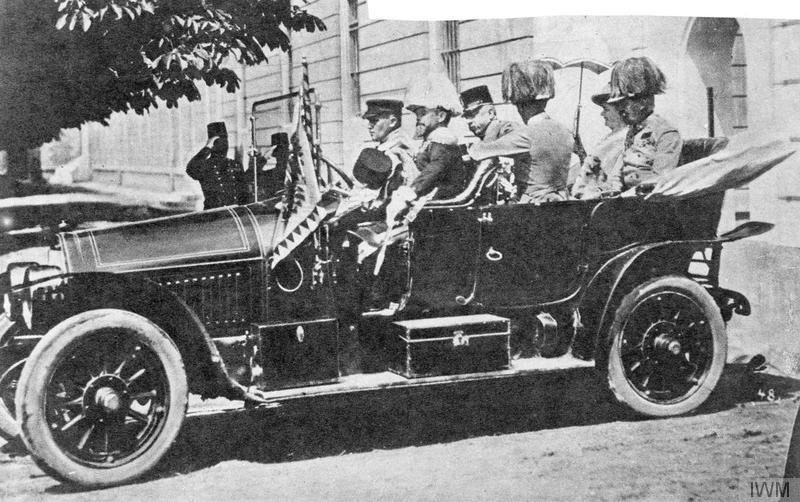
walk down a quiet side street in Sarajevo on the morning of June 28, 1914. The air is warm, the sun already sharp. A crowd has gathered along the Appel Quay to watch the open-top Gräf & Stift touring car roll slowly past. Inside sit Archduke Franz Ferdinand, heir to the Austro-Hungarian throne, and his wife Sophie, Duchess of Hohenberg. They are smiling, waving, unaware that six young Bosnian Serbs are scattered along the route, armed with bombs and pistols, waiting for their chance. One of them, a thin nineteen-year-old named Gavrilo Princip, has just finished a sandwich at Moritz Schiller’s delicatessen because he thinks the motorcade has already passed. Then the driver makes a wrong turn onto Franz Joseph Street. The car stalls. Princip steps forward, raises his Browning pistol, and fires twice at point-blank range.Causes of World War I: Why Europe Was a Powder Keg in 1914
- The Franco-Russian Alliance (1894) locked France and Russia together against Germany and Austria-Hungary.
- The Anglo-French Entente Cordiale (1904) and Anglo-Russian Entente (1907) brought Britain into a loose understanding with France and Russia.
- Germany and Austria-Hungary remained bound by the Dual Alliance (1879), later joined by Italy in the Triple Alliance (1882).
Sarajevo & the July Crisis: Thirty-Seven Days to War (June 28 – August 4, 1914)

- Austria-Hungary wanted to crush Serbian nationalism once and for all.
- Germany dreaded losing Austria-Hungary as its only reliable ally and believed a short war would improve its position.
- Russia dreaded losing prestige and influence in the Balkans if it abandoned Serbia again (as in 1909).
- France feared being left alone against Germany if Russia did not mobilize.
- Britain feared German domination of the continent if France fell quickly.
The First Months: Illusions Shattered (August–December 1914)

The July Crisis of 1914 and the Start of World War I
The July Crisis remains one of the clearest examples of how a regional conflict can escalate into a global war. The Assassination of Archduke Franz Ferdinand did not make war inevitable—but it triggered a chain reaction of decisions, alliances, and mobilisations that spiralled out of control.
Within just five weeks, Europe’s great powers moved from diplomacy to full-scale war:
- Austria-Hungary attacked Serbia
- Russia mobilised to defend Serbia
- Germany declared war on Russia and France
- The United Kingdom entered the war after the invasion of Belgium
Historians continue to debate the deeper causes of World War I—whether it was driven by German strategy, alliance systems, or mutual miscalculation. What is clear is that the European balance of power in 1914 was far more fragile than it appeared.
Today, the July Crisis is widely used as a case study in international relations. It shows how quickly escalation can happen when leaders rely on rigid military plans, underestimate their rivals, and assume that war will be short and controllable.
In 2026, the lesson remains powerful: global conflicts rarely begin with a single decision—they emerge from a chain of choices made under pressure, fear, and uncertainty.
- The Sleepwalkers: How Europe Went to War in 1914 by Christopher Clark (the current masterpiece—shows how avoidable it was)
- July 1914: Countdown to War by Sean McMeekin (day-by-day reconstruction)
- The War That Ended Peace by Margaret MacMillan (long-term causes, beautifully written)
- Europe’s Last Summer by David Fromkin (argues Germany deliberately sought war)
- The Origins of the First World War by James Joll & Gordon Martel (classic short introduction)
- The National Archives UK – July Crisis Documents — digitized British diplomatic cables
- German Historical Institute London – 1914 Resources → scholarly articles & primary sources
- Harvard University – The July Crisis — collection of key telegrams & ultimatums
- Britannica – Causes of World War I — timeline & structural overview
- The Avalon Project – World War I Documents → full text of treaties, ultimatums, declarations
If you found this account of the assassination and the rapid slide into global war compelling, you may also like these related articles on the causes, key figures, and consequences of World War I:
- Franz Ferdinand and the Two Shots That Changed the World — A closer look at Archduke Franz Ferdinand, his assassination in Sarajevo, and its immediate global impact.
- Wilhelm II and the Road to World War I: Ambition, Power, and Miscalculation — How Germany’s ambitious emperor and his aggressive policies helped turn a regional crisis into a world war.
- Wilhelm II: The Last German Kaiser and the Road to World War I — The full portrait of the Kaiser whose decisions played a central role in the July Crisis of 1914.
- How Gavrilo Princip Triggered War That Changed the World — The story of the young assassin and the Black Hand movement behind the plot.
- From Peace to Chaos: Europe After World War I — What happened in the chaotic years following the war that began with Franz Ferdinand’s death.
- Inside the Hall of Mirrors: When Germany Was Humbled at Versailles — The controversial peace treaty that reshaped Europe after the conflict sparked in Sarajevo.


Comments