Hey timeline kin, picture a crisp December dawn in 1851. Fog hugs the rooftops of Paris like a conspirator’s cloak. In the half-light, soldiers move silently through the streets—boots muffled, bayonets fixed. By midday, the National Assembly lies empty, its deputies arrested or scattered.
This was the moment that ended the French Republic and gave birth to the Second Empire.
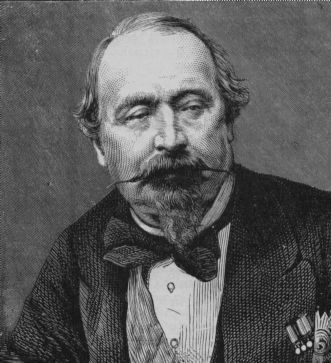
A pale man with a neatly trimmed mustache and eyes that seem to hold both melancholy and steel stands at the center of it all. He has just overturned the republic he once led. His name is Louis-Napoléon Bonaparte, and in exactly one year, he will crown himself Napoleon III, Emperor of the French—the last emperor France would ever know. This is the story of a dreamer who chased his uncle’s ghost across half a century of exile, prison, and improbable triumph—only to watch everything crumble in the mud and cannon smoke of the Battle of Sedan. He was romantic, calculating, chronically ill, and endlessly ambitious. He modernized France faster than any ruler before him. He rebuilt Paris into the City of Light we still recognize. Yet he ended his reign as a prisoner of war, dying far from home with a reputation forever stained by one catastrophic miscalculation.
The 1851 Coup That Changed France
Born on the night of 20 April 1808 in the Tuileries Palace, Charles-Louis Napoléon Bonaparte entered the world as the nephew of the man who had once conquered Europe. His father was Louis Bonaparte, briefly King of Holland. His mother, Hortense de Beauharnais, was the daughter of Josephine.
After Waterloo in 1815, the family scattered into exile. The boy grew up in Switzerland and Germany, raised on tales of imperial glory and the sting of defeat.
He tried twice to seize power in the 1830s—once in Strasbourg, once in Boulogne—with all the flair of a stage play. Both attempts failed spectacularly. Imprisoned in the fortress of Ham, he spent six years reading, writing, and refining his vision of a “Napoleonic idea” that blended authoritarian order with progressive social reform.
By the time the 1848 revolution toppled the July Monarchy, Louis-Napoléon had perfected the art of the comeback.
From President to Emperor
The revolution of 1848 swept him back to France like a tide. In December that year, running on the Bonaparte name and promises of stability, he won the presidency of the Second Republic in a landslide—nearly 75 percent of the vote.
For three years, he played the part of the modest republican, touring the countryside, shaking hands, and quietly building support.
But the constitution barred him from a second term. On 2 December 1851—the anniversary of his uncle’s coronation and the victory at Austerlitz—he struck.
Troops occupied key buildings overnight. Posters proclaimed the dissolution of the Assembly. Street fighting erupted the next day; hundreds died. A carefully managed plebiscite gave him the mandate he wanted.
One year later, on the same symbolic date, the Senate proclaimed him Napoleon III, Emperor of the French. The Second French Empire had begun. How Napoleon III Transformed Paris
No French ruler changed the physical face of the nation more dramatically. Working hand-in-hand with the ambitious prefect Baron Georges-Eugène Haussmann, Napoleon III tore out the cramped, disease-ridden medieval heart of Paris. Wide, straight boulevards sliced through the city—designed not only for elegance and traffic but, some whispered, to make future barricades harder to build. Gas lighting turned nights into day.
New sewers, parks (Bois de Boulogne, Parc des Buttes-Chaumont), bridges, and railway stations rose everywhere. Department stores, investment banks, and the world’s first great international expositions made Paris the undisputed capital of modernity and pleasure.
This modernization of Paris under Haussmann still defines the city millions walk through today. Industry boomed. Rail mileage multiplied sixfold. Workers gained the legal right to strike in 1864. France felt prosperous, dynamic, and confident.
The Road to the Franco-Prussian War
Napoleon III wanted France to be respected again on the world stage. He joined Britain in the Crimean War. He backed Italian unification against Austria and gained Nice and Savoy as rewards.
Yet the deeper he reached, the more slippery success became. His attempt to create a French-backed empire in Mexico—installing Archduke Maximilian—turned into a costly fiasco.
By the late 1860s, a new shadow loomed across the Rhine: Prussia, unified and strengthened under Otto von Bismarck. Napoleon III, increasingly frail from painful bladder stones and surrounded by courtiers who fed his vanity, allowed himself to be drawn into war in July 1870.
France declared war, expecting a quick victory. Instead, the Prussian army—better armed, better led, better mobilized—closed the trap.
The Fall at Sedan: A Micro Dramatic Moment
The emperor, sick and despairing, rode among his shattered troops. Cannon fire thundered. Smoke choked the air. Realizing further resistance was futile, he ordered the white flag raised—not once, but twice—after it was torn down by defiant officers.
Then came the quiet, heartbreaking moment: Napoleon III dictated a letter to King Wilhelm of Prussia. “Not having been able to die in the midst of my troops,” he wrote, “it only remains for me to place my sword in your Majesty’s hands.”He surrendered with over 100,000 men. News reached Paris within hours. Crowds poured into the streets. The empire collapsed almost bloodlessly on 4 September.
Meanwhile, in the Tuileries Palace, Empress Eugénie showed steel in chaos. As mobs roared outside, she refused to order troops to fire on French citizens. “I shall not be the Marie-Antoinette of this revolution,” she declared.
Disguised as a simple servant, she slipped out a side door with her lady-in-waiting. They fled through the Louvre, nearly spotted by rioters, then escaped in a humble carriage—eventually reaching the coast and exile in England with almost nothing but the clothes on their backs.
Exile and Death
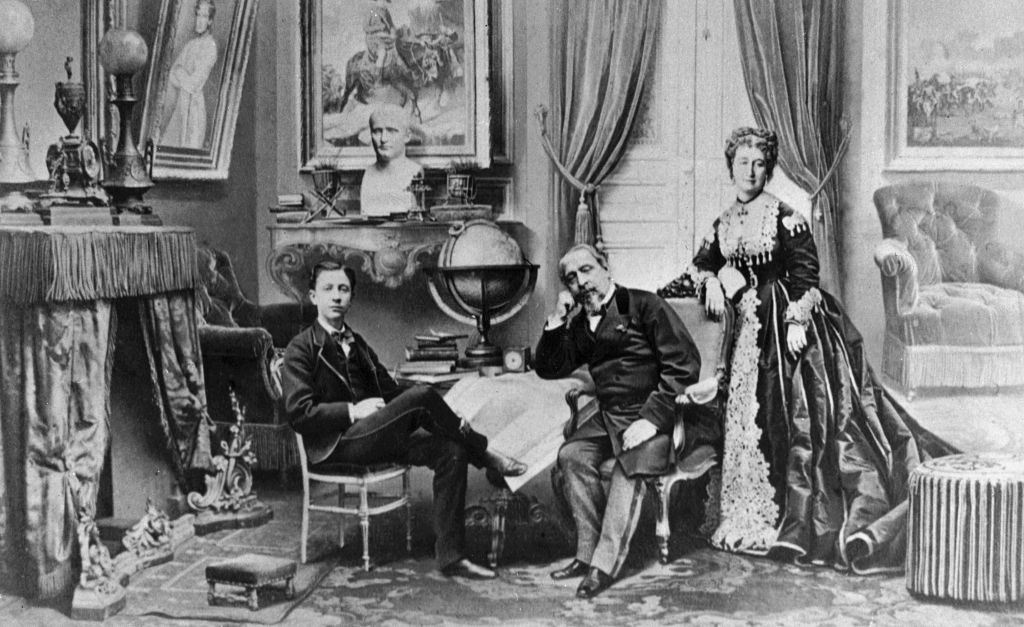
Napoleon III spent his final years in quiet exile at Chislehurst in Kent, England. He wrote defenses of his reign, played with his son, and hoped—futilely—for restoration.
In January 1873, surgeons operated on his bladder stones. The procedure went badly. On 9 January 1873, at the age of 64, the last French emperor died in a foreign country.
The Legacy of Napoleon III
In the long sweep of European history, Napoleon III stands as one of its most complex and paradoxical rulers. Under the Second French Empire, he delivered nearly two decades of stability, economic expansion, and rapid modernization at a pace few leaders of the 19th century could match.
He transformed France not just politically, but physically and socially. Paris was rebuilt into a modern capital with wide boulevards, advanced sanitation, public parks, and infrastructure that still define the city today. Industrial growth accelerated, railways expanded across the country, and new financial institutions fueled a rising economy. He also introduced measured social reforms, including legalizing workers’ right to strike and expanding access to education, quietly reshaping the relationship between the state and its citizens.
Yet these achievements came at a cost. Napoleon III rose to power by dismantling a republic through a coup, and his regime maintained tight control over political life, press freedom, and opposition. His foreign policy, initially successful, grew increasingly overconfident and erratic. The failed intervention in Mexico and, more decisively, the disastrous defeat in the Franco-Prussian War exposed the limits of his leadership. At the Battle of Sedan, the empire he had built collapsed in a single day, leaving France shocked, divided, and vulnerable.
His legacy, therefore, resists simple judgment. He was neither merely a failed autocrat nor a misunderstood modernizer, but something more complicated: a ruler who genuinely sought to reconcile authority with progress, and national glory with the demands of a changing world. For a time, he succeeded—perhaps more than many expected. But in the end, the very ambitions that elevated him also hastened his fall.
Napoleon III’s story is not just about power gained and lost. It is about the risks of governing at the edge of transformation—where vision, control, and reality rarely move at the same speed.
What lingers with you about this restless Bonaparte?
The foggy December morning of the 1851 coup?
The gaslit boulevards rising under Haussmann’s axe?
The tragic surrender at Sedan, sword in hand?
Or Eugénie’s desperate flight through revolutionary Paris?
Write whatever is on your mind below. I read every word.
Books that shaped how I see Napoleon III:
- Napoleon III: A Life by Fenton Bresler
- The Shadow Emperor by Alan Strauss-Schom
- Paris Reborn: Napoléon III, Baron Haussmann, and the Quest to Build a Modern City by Stephane Kirkland
- Eugénie: The Empress and Her Empire by Desmond Seward
Reliable sources I leaned on for key facts:
Further Reading
If you enjoyed this story of the man who transformed Paris into the City of Light — only to be cast aside — you may also like these related articles on 19th-century France and the making of modern Europe:




Comments