


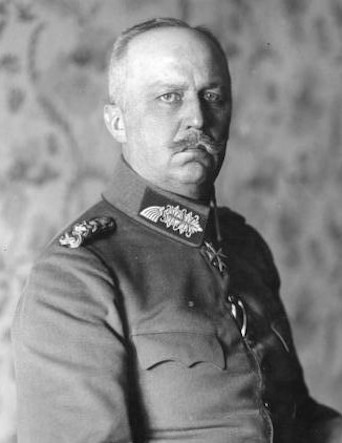
Hey timeline kin, walk into the gloomy map room of German Army Supreme Headquarters at Spa, Belgium, late September 1918. Rain drums on the roof. The air is full of cigarette smoke and the smell of wet wool. A stocky man in his early fifties stands at the center of the long table, sleeves rolled up, fists planted on the map of the Western Front. His face is flushed, eyes weary from days without sleep. Papers are scattered everywhere—telegrams from the front, casualty lists, production figures that no longer add up.
The officers around him are silent. They have just heard him say the words no German general has spoken in four years: “The war is lost.” The man is Erich Ludendorff. He has been the de facto dictator of Germany for the last two years, running the war while the Kaiser signs decrees and Hindenburg lends his name to the headlines. Now, in this moment, the architect of total war is admitting total defeat—and in the next breath, he will demand that the civilians take the blame.The Making of a Staff Officer – Early Career (1865–1914)
Erich Ludendorff in World War I: From Liège to Military Dictatorship (1914–1918)
- Hindenburg Programme — total industrial mobilization
- Auxiliary Service Law — forced labor for men 17–60
- Unrestricted submarine warfare (January 1917) — the decision that brought America into the war
- Control of censorship, food rationing, propaganda, and even foreign policy
Abdication, Exile, and the Post-War Years (1918–1937)

Erich Ludendorff was not a traditional battlefield commander, but a master organizer who believed total war—full industrial mobilization, strict discipline, and relentless pressure—could secure victory. Between 1916 and 1918, he helped transform Germany into a highly centralized war machine. However, his strategic decisions, including the resumption of unrestricted submarine warfare, brought the United States into World War I and accelerated Germany’s defeat.
After the war, Ludendorff played a key role in promoting the “stab-in-the-back” myth, blaming Germany’s collapse on internal betrayal rather than military failure. This narrative weakened the Weimar Republic and later became a powerful propaganda tool for Adolf Hitler and the Nazi movement.
Today, Ludendorff is remembered less as a military strategist and more as a cautionary figure—an example of how unchecked authority, rigid thinking, and refusal to accept defeat can shape both the outcome of war and the dangerous politics that follow.
- Ludendorff: The First Quarter-Master General by D.J. Goodspeed (classic biography)
- The First World War by Martin Gilbert (context on Ludendorff’s strategic decisions)
- Ring of Steel by Alexander Watson (Eastern Front & Ludendorff’s role)
- The Deluge by Adam Tooze (economic & political context of Ludendorff’s dictatorship)
- Hindenburg and Ludendorff by John Lee (dual biography, excellent on their partnership)
- Bundesarchiv – Ludendorff Papers — digitized letters, orders, photos
- Deutsches Historisches Museum – Ludendorff — German museum entry
- German Historical Institute London – First World War — scholarly articles & primary sources
- The Great War Primary Documents Archive — Ludendorff’s memoirs & German military records
- Britannica – Erich Ludendorff — timeline & evaluation
If you found this examination of Erich Ludendorff’s immense power and the de facto military dictatorship during World War I insightful, you may also like these related articles on Germany’s leadership and the road to defeat:
- Wilhelm II: The Emperor Who Watched His Empire Collapse — The Kaiser who gradually lost real power to Ludendorff and Hindenburg as the war progressed.
- Paul von Hindenburg and the Fate of the Weimar Republic — Ludendorff’s longtime partner, who later played a decisive role in the rise of Hitler and the end of Weimar democracy.
- The Fall of the German Empire: Wilhelm II, Revolution, and the Birth of Weimar (1918) — How the military failures under Ludendorff’s leadership contributed to revolution and the collapse of the German Empire.
- Wilhelm II and the Road to World War I: Ambition, Power, and Miscalculation — The pre-war decisions and aggressive policies that set the stage for Germany’s total war effort.
- Inside the Hall of Mirrors: When Germany Was Humbled at Versailles — The humiliating peace treaty that followed Germany’s defeat under Ludendorff’s military command.
- From Peace to Chaos: Europe After World War I — The turbulent post-war years that emerged from the military dictatorship Ludendorff helped create.


Comments