Hey timeline kin, The afternoon heat in Hanoi’s Ba Đình Square pressed down like a heavy hand on September 2, 1945. Thousands gathered, faces turned upward, as a slight figure in a simple khaki suit stepped to the microphone. His voice, calm yet charged with decades of quiet fury, rang out: “All men are created equal. They are endowed by their Creator with certain inalienable rights; among these are Life, Liberty, and the pursuit of Happiness.” Ho Chi Minh had just declared the birth of the Democratic Republic of Vietnam, quoting the American Declaration of Independence while the ink on Japan’s surrender was barely dry. Cheers erupted, but joy proved short-lived. Within months, French warships would loom again off the coast, determined to reclaim their lost colony.
This is the story of the First Indochina War (1946–1954) — a brutal, grinding conflict that pitted a determined Vietnamese nationalist movement against a fading European empire. It began with colonial ambition and ended with one of the most stunning military upsets of the 20th century. Outgunned guerrillas, led by a self-taught strategist, eventually humbled a modern Western army and redrew the map of Southeast Asia.
The Fragile Dawn of Independence (1945–1946)
World War II had shattered French control. Japanese occupation weakened the old colonial order, and when Japan surrendered in August 1945, a power vacuum opened. The Viet Minh — a broad nationalist coalition led by Ho Chi Minh and organized militarily by the brilliant Vo Nguyen Giap — seized the moment. They took Hanoi and much of the north with relatively little resistance.
Ho’s declaration of independence on 2 September 1945 was a masterpiece of hope and pragmatism. Yet France, humiliated by its wartime defeats, refused to let go. Negotiations in early 1946 produced a fragile accord recognizing Vietnam as a “free state” within the French Union, but mistrust ran deep. French forces returned in strength, especially in the south.
Tensions exploded on 23 November 1946 when French warships bombarded the port of Haiphong, killing thousands of civilians. On 19 December, the Viet Minh struck back in Hanoi, attacking French positions and cutting power. The First Indochina War had begun.
Guerrilla Dawn and the Long War of Attrition (1947–1953)
At first, the mismatch looked hopeless for the Vietnamese. The French possessed superior firepower, aircraft, and professional troops, including Foreign Legionnaires and colonial units from Africa. They controlled the cities and major roads. The Viet Minh, by contrast, melted into the countryside and mountains, waging a classic people’s war.
General Giap perfected a strategy of protracted conflict: harass, retreat, build strength, strike where the enemy was weakest. Peasants supplied food and intelligence. Women and children carried supplies along hidden jungle trails. The Chinese communist victory in 1949 changed everything — Beijing began sending weapons, advisers, and heavy artillery across the border.
The French responded with aggressive operations, trying to draw the Viet Minh into open battle. They created “mobile groups” and even experimented with airborne raids. Yet the more they chased shadows in the jungle, the more their casualties mounted and their will eroded back home. By the early 1950s, the war had become a bleeding ulcer for France.
The Fatal Gamble at Dien Bien Phu (1953–1954)
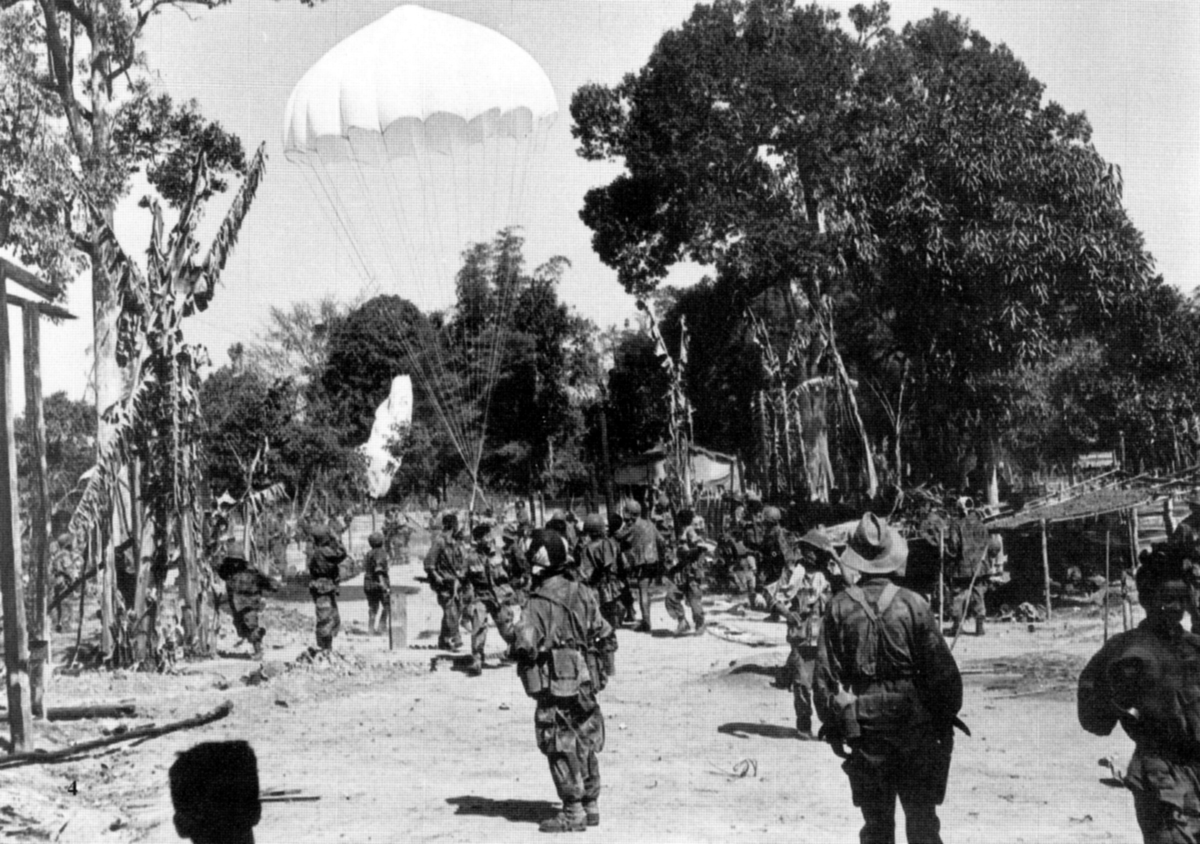
In late 1953, French commander General Henri Navarre decided to force a decisive showdown. He ordered paratroopers to seize the remote valley of Điện Biên Phủ near the Laotian border, hoping to lure Giap into a conventional battle where French artillery and airpower could destroy the Viet Minh once and for all. It was a catastrophic miscalculation.
Giap accepted the invitation — but on his own terms. Under the cover of night and jungle, tens of thousands of Viet Minh soldiers and porters dragged disassembled heavy artillery pieces over steep mountains, positioning them on the surrounding hills. They dug an intricate network of trenches that crept ever closer to the French positions like a tightening noose.
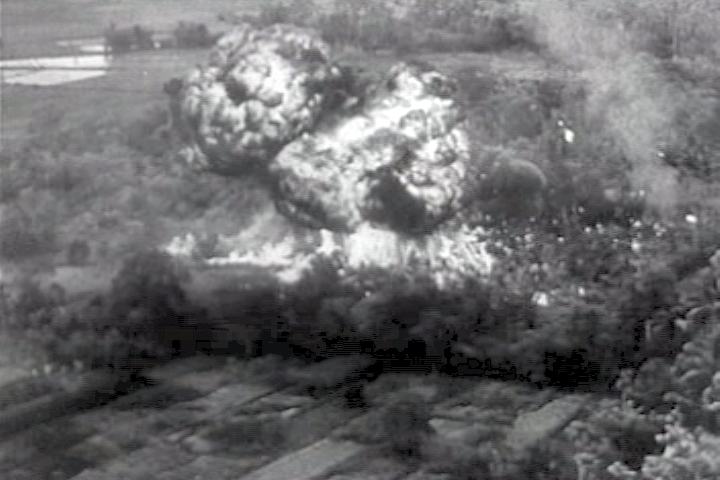
The battle began on 13 March 1954 with a thunderous artillery barrage. French strongpoints fell one by one. Supplies had to be air-dropped, but shrinking drop zones and fierce anti-aircraft fire turned resupply into a deadly gamble. Monsoon rains turned the valley into a sea of mud. After 56 days of relentless pressure, on 7 May 1954, the last French positions were overrun. The red flag with its yellow star rose over the battered command bunker.
More than 1,500 French soldiers died in the fighting; nearly 10,000 were captured. Viet Minh losses were far higher — perhaps 8,000 to 30,000 — but they had achieved the impossible: a colonial army of a major power had been decisively defeated by Asian revolutionaries.
The Road to Geneva and Bitter Partition (1954)
News of the fall of Dien Bien Phu reached Geneva just as international talks on Indochina opened. Exhausted and politically broken, France sought an exit. The Geneva Conference (April–July 1954) produced a ceasefire and temporary division of Vietnam at the 17th parallel. The Viet Minh would regroup in the north, French forces in the south. Nationwide elections to reunify the country were promised for 1956.
The accords also granted independence to Laos and Cambodia. Yet the United States, wary of communist expansion, refused to sign the final declaration and began quietly backing the anti-communist government in the south. The stage was quietly set for future tragedy.
Legacy of a War That Changed Everything
The First Indochina War cost hundreds of thousands of lives—soldiers and civilians caught in a conflict that reshaped an entire region. It brought an end to French colonial rule in Southeast Asia, marking one of the first major defeats of a European empire by a nationalist movement in the modern era. Across Asia and Africa, independence movements took notice: empires were no longer invincible.
For Vietnam, victory came at a heavy price. The country emerged not united, but divided at the 17th parallel—its people separated, its future uncertain. What was meant to be a temporary line would soon harden into one of the most dangerous fault lines of the Cold War.
More than seventy years later, the war’s echoes still resonate. It proved that determination, popular support, and adaptive strategy could overcome even the most advanced military power. But it also revealed a harsher truth: that victory in war does not always bring peace.
The end of one conflict in 1954 quietly set the stage for another—larger, deadlier, and far more global in its consequences.
What lingers with you about this pivotal conflict?
The hopeful morning of Ho Chi Minh’s declaration in 1945?
The quiet heroism of porters hauling artillery through the mountains toward Dien Bien Phu?
The shock of the French defeat that shook empires?
Or the fragile line drawn at the 17th parallel that would one day ignite another, even bloodier war?
Write whatever is on your mind below. I read every word.
Books that shaped how I see the First Indochina War:
- Street Without Joy by Bernard B. Fall (classic on-the-ground account)
- The Battle of Dien Bien Phu by Jules Roy
- Vietnam: A History by Stanley Karnow
- A Bright Shining Lie by Neil Sheehan (context for what came next)
Reliable sources I leaned on for key facts:
Empires fall not always with a bang, but sometimes with the steady tramp of feet carrying guns through the rain.
Related Articles




Comments