


Hey timeline kin, it’s a humid afternoon in Tokyo, late 1940s, inside the grand conference room of the Ministry of Greater East Asia. The long table is covered with maps of Southeast Asia and the Pacific, their edges curling from the damp. A dozen men in dark suits and military tunics sit stiffly, faces serious but eyes bright with something close to hunger. At the head of the table stands Foreign Minister Yōsuke Matsuoka.
He spreads his hands over the map like a conductor about to raise the baton, then speaks in a voice that is calm but carries the weight of prophecy: “Gentlemen, the time has come to declare to the world what we have always known in our hearts: Asia belongs to Asians. No more white men drawing lines on our soil, no more Dutch, British, French, American masters. We will build the Greater East Asia Co-Prosperity Sphere—a family of nations, led by Japan, free from Western chains, rich in resources, strong in unity.”He pauses, lets the phrase hang in the warm air like incense smoke. The room is silent except for the soft scratch of pencils on paper as aides note down the new official name. Outside, cherry blossoms are falling early, drifting across the ministry courtyard like pink snow. Inside, the men nod slowly. No one laughs. No one questions the contradiction between “co-prosperity” and “led by Japan.” The words sound noble. The intention is empire.
That afternoon, the Greater East Asia Co-Prosperity Sphere was officially born—not as a detailed plan, but as a slogan, a dream, a justification. Within two years, it would stretch from Manchuria to the Solomon Islands, from Burma to the Philippines, covering nearly one-fifth of the world’s surface and hundreds of millions of people. Within four years, it would lie in ruins, exposed as one of the most cynical and brutal colonial projects of the 20th century.
The Dream Takes Shape – Ideology & Early Expansion (1931–1941)
The idea did not appear suddenly in 1940. It had been simmering since the 1931 Mukden Incident, when Japan seized Manchuria and created the puppet state of Manchukuo. Japanese intellectuals and military planners began talking openly of “Asia for Asians,” a pan-Asian bloc that would liberate the continent from Western imperialism. The phrase “Co-Prosperity Sphere” first appeared in official documents in 1940, after Japan moved into French Indochina and signed the Tripartite Pact with Germany and Italy.
The propaganda was elegant:
- Japan, as Asia's elder brother, protects the younger nations.
- Liberation from white colonialism.
- Economic self-sufficiency (autarky) for the whole region.
- Harmony between races under Japanese leadership.
The reality was different. The army and navy saw the “Sphere” as a way to secure oil, rubber, tin, rice, and iron—resources Japan desperately needed after the U.S. oil embargo of July 1941. The Greater East Asia Ministry was created in November 1942 to administer occupied territories, but real power stayed with the military.
The High Tide – Conquest & Occupation (December 1941 – Mid-1943)
Pearl Harbor (December 7, 1941) was the signal. Within six months, Japan conquered an empire larger than anything since the Mongols:
- December 1941–January 1942: Malaya, Hong Kong, Philippines.
- February 1942: Singapore (“the Gibraltar of the East”) surrendered.
- March 1942: Dutch East Indies (oil fields).
- April–May 1942: Burma, Andaman Islands.
Japan installed puppet governments:
- Ba Maw in Burma.
- José Laurel in the Philippines.
- Wang Jingwei in occupied China (Nanjing regime).
- Subhas Chandra Bose’s Indian National Army (allied with Japan).
In August 1943, Japan granted nominal independence to Burma and the Philippines. In November 1943, the Greater East Asia Conference was held in Tokyo. Tojo hosted leaders from Manchukuo, Wang Jingwei’s China, Thailand, Burma, the Philippines, and Bose. The rhetoric was lofty: “Asia for Asians,” “co-prosperity,” “mutual respect.”
The reality was Japanese military rule, forced labor (romusha), rice requisitions that caused famine, and Kempeitai torture chambers.
The Collapse – Allied Counter-Offensives & Internal Fracture (1943–1945)
The Sphere began to crack in 1943:
- Guadalcanal (1942–43) — Japan lost offensive momentum.
- Imphal–Kohima (1944) — failed invasion of India.
- Leyte Gulf (October 1944) — The Japanese navy was crippled.
- Burma reconquered by Slim’s 14th Army (1944–45).
- U.S. island-hopping reached Okinawa (April 1945).
Inside the Sphere, resistance grew:
- Aung San switched sides in Burma (March 1945).
- Philippine guerrillas harassed Japanese garrisons.
- Indonesian nationalists prepared for independence.
By August 1945, after Hiroshima and Nagasaki, Japan surrendered. The Co-Prosperity Sphere vanished overnight. Sukarno declared Indonesian independence on August 17. The dream was dead.
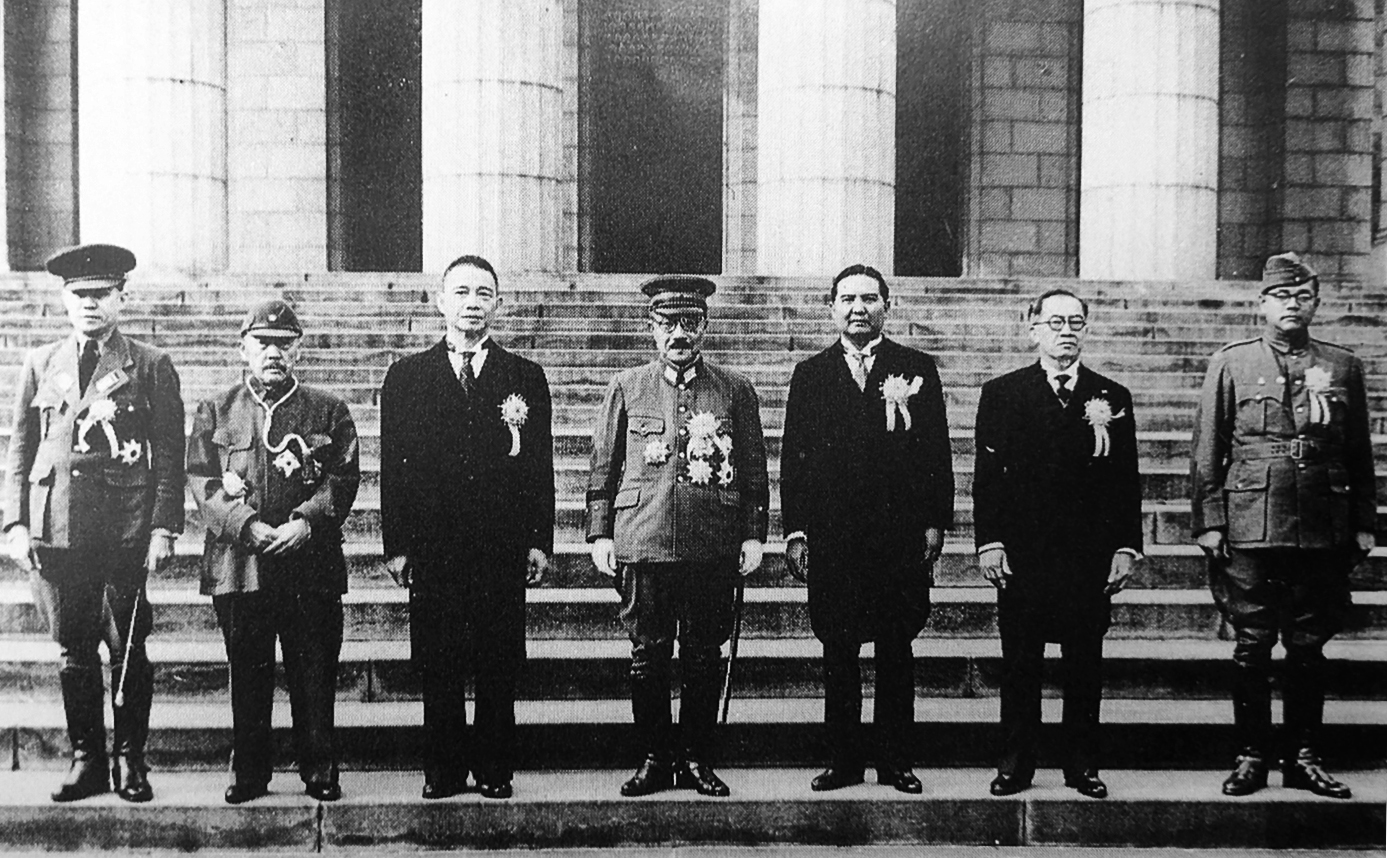
The Rise and Collapse of Japan’s Wartime Empire
The Greater East Asia Co-Prosperity Sphere was one of the most seductive and cynical lies of the 20th century. It promised liberation and delivered occupation. It spoke of Asian solidarity while enforcing Japanese supremacy. It used the language of anti-colonialism to build the largest colonial empire Asia had ever seen—and then lost it all in four years.
In 2026, the phrase is rarely used except in history books. But its legacy is everywhere: the borders of modern Southeast Asia, the nationalism that drove independence movements, the memory of forced labor and wartime atrocities, the complicated love-hate relationship many Asians still feel toward Japan. The Sphere did not create Asian unity; it helped forge it in opposition.
What part of this strange, short-lived empire stays with you?
The grand conference in Tokyo, where puppet leaders applauded Japanese “leadership”?
The forced rice collections that caused famine in Vietnam, while Japan stockpiled?
The moment Aung San turned his army against his former Japanese allies?
Or the quiet, bitter truth that “Asia for Asians” became—almost immediately—“Asia for Japan”?
The grand conference in Tokyo, where puppet leaders applauded Japanese “leadership”?
The forced rice collections that caused famine in Vietnam, while Japan stockpiled?
The moment Aung San turned his army against his former Japanese allies?
Or the quiet, bitter truth that “Asia for Asians” became—almost immediately—“Asia for Japan”?
Write whatever is on your mind below. I read every word.
Books that shaped how I understand the Greater East Asia Co-Prosperity Sphere:
- Japan’s Total Empire by Louise Young (how the Sphere was sold to the Japanese public)
- The Greater East Asia Co-Prosperity Sphere by Jeremy A. Yellen (detailed ideological & administrative history)
- The Blue-Eyed Enemy by Robert C. Christopher (Japanese occupation policies)
- A Sudden Rampage by Nicholas Tarling (Southeast Asia under Japanese rule)
- The Japanese Occupation of Malaya by Paul H. Kratoska (case study of occupation)
Reliable sources I leaned on for key facts:
- National Archives of Japan – Greater East Asia Ministry Records
- Britannica – Greater East Asia Co-Prosperity Sphere
- National Archives of Singapore – Japanese Occupation
- Australian War Memorial – Japanese Occupation of Southeast Asia
- Yale Avalon Project – Greater East Asia Conference 1943
Further Reading
If you enjoyed this analysis of Japan’s ambitious “Greater East Asia Co-Prosperity Sphere” and its ultimate collapse, you may also like these related articles on Japan’s imperial expansion and World War II in Asia:
- How Japan’s Attack on Pearl Harbor Changed the World — The bold strike that was intended to secure Japan’s vision of a new Asian order under its leadership.
- Hideki Tōjō: The Man Who Led Japan Into World War II — The prime minister who aggressively promoted and expanded the Co-Prosperity Sphere.
- He Planned Pearl Harbor But Feared America: The Story of Yamamoto — The admiral who doubted Japan’s ability to sustain the vast empire it tried to build.
- The Pacific War: The Brutal Conflict That Reshaped Asia Forever — The devastating war that both created and destroyed Japan’s dream of dominating Asia.
- The Night the Kwantung Army Changed History — The earlier aggression in Manchuria that became the foundation of Japan’s Greater East Asia vision.
- The Emperor Who Witnessed Japan’s Surrender — The final days of Japan’s imperial ambitions and the collapse of the Co-Prosperity Sphere.


Comments