


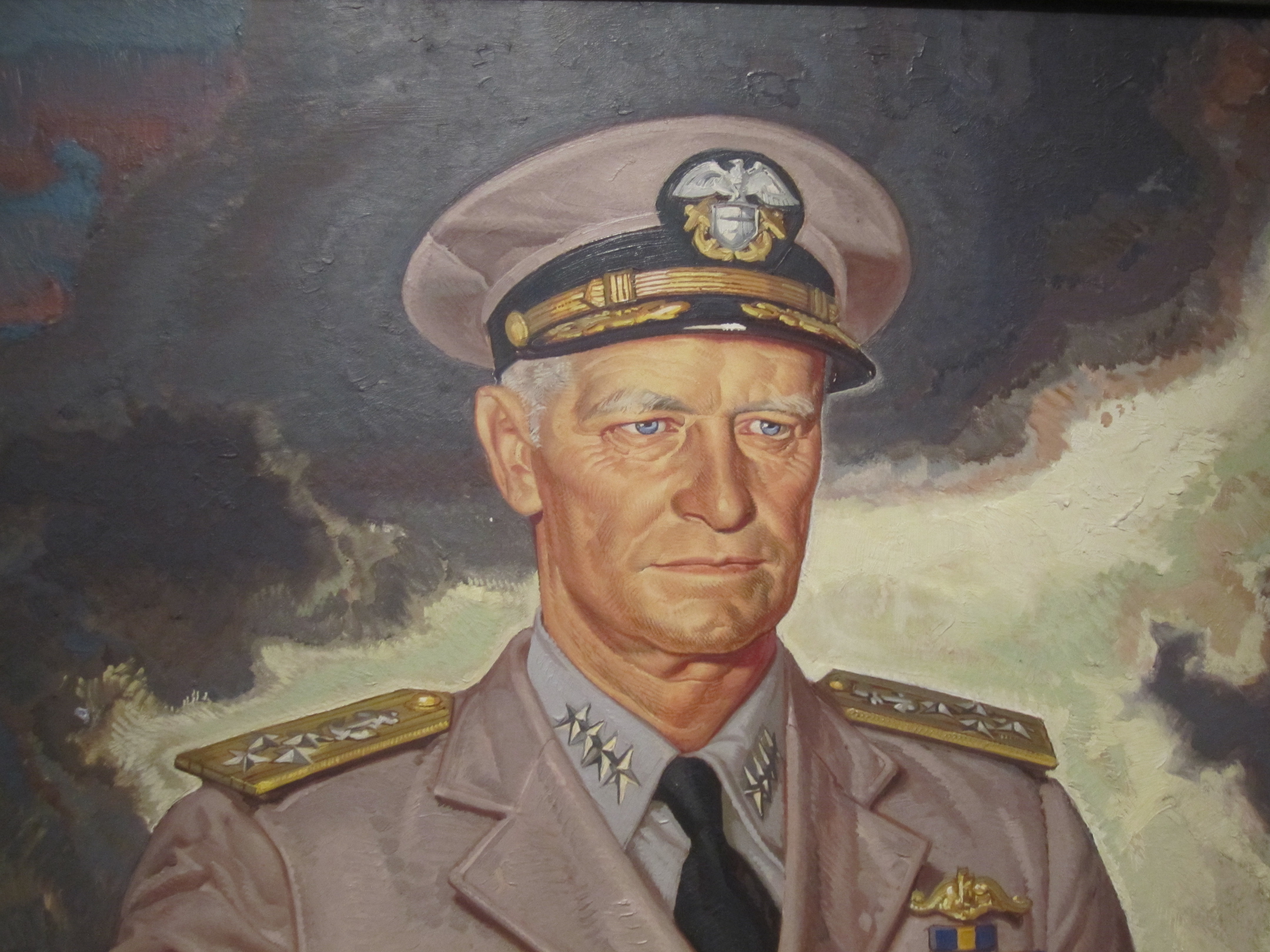
Hey timeline kin, A soft Texas breeze drifted through the stone hotel built by a retired sea captain in Fredericksburg, one crisp February morning in 1885. Inside, a young widow named Anna gave birth to a son she would raise without a father.
The boy never knew his biological dad, who had died months earlier, but he grew up listening to his grandfather’s salty tales of sailing the oceans. Those stories planted a quiet longing for the sea in young Chester William Nimitz. Decades later, that same boy would stand on the deck of the battleship USS Missouri in Tokyo Bay, signing the document that ended the greatest naval war in history.This is the story of Chester W. Nimitz — the calm, methodical Texan who took command of a shattered Pacific Fleet days after Pearl Harbor and turned the tide against Japan. A submarine pioneer who believed in diesel engines and underway replenishment, a strategist who trusted codebreakers, and a leader whose steady hand guided America’s island-hopping campaign across thousands of miles of ocean. He never sought the spotlight, yet he became the architect of victory in the Pacific.
Early Life in Texas and Naval Academy at Annapolis (1885–1905)
Born on 24 February 1885 in Fredericksburg, Texas, Chester lost his father before he drew his first breath. His grandfather, Charles Nimitz — a German immigrant and former sea captain — became his role model. The boy helped around the family hotel, hiked the Texas hills, and dreamed of adventure. When no West Point appointment opened, he took the exam for the U.S. Naval Academy at Annapolis and entered in 1901.
He graduated seventh in his class of 114 in 1905. Early assignments included duty aboard the battleship Ohio and a tour in the Philippines. In 1909, while commanding the destroyer Decatur, he ran the ship aground in the Philippines — an embarrassing incident that taught him humility and attention to detail. Instead of derailing his career, it helped shape the careful, thorough officer he would become.
Submarine Career, Family Life, and Naval Promotions (1909–1941)
Nimitz fell in love with the silent service. He qualified in submarines, commanded several boats, and later oversaw the shift from gasoline to diesel propulsion. During World War I, he served as chief of staff to the commander of U.S. Atlantic Submarine Forces, deepening his conviction that submarines would play a decisive role in future wars.
In 1913, he married Catherine Vance Freeman of Massachusetts. They raised four children and shared a deep, steady partnership that anchored him through long separations. Between the wars, Nimitz held varied commands: submarine divisions, destroyers, a heavy cruiser in the Asiatic Fleet, and staff positions. In 1939, he became Chief of the Bureau of Navigation in Washington, responsible for personnel — a role that gave him unmatched knowledge of the Navy’s officers.
Pearl Harbor and the Darkest Days (1941–1942)
Ten days after the Japanese attack on Pearl Harbor, President Franklin D. Roosevelt chose Nimitz to replace the disgraced Admiral Husband Kimmel as Commander in Chief, U.S. Pacific Fleet. On 31 December 1941, Nimitz took command in a simple ceremony aboard the submarine USS Grayling — the battleships were still resting on the harbor bottom.
The situation was dire. The Pacific Fleet was crippled, Japanese forces were sweeping across Southeast Asia and the Pacific islands, and morale was low. Nimitz moved into a modest house overlooking the harbor and quietly set to work. He trusted his intelligence team, which had partially cracked Japanese naval codes. With that edge, he risked everything on two crucial early battles.
In May 1942 came the Battle of the Coral Sea — the first naval battle fought entirely by carrier aircraft. Though tactically a draw, it stopped the Japanese advance toward Australia. Then, in early June, Nimitz orchestrated the ambush at Midway. Despite being outnumbered, American carriers sank four Japanese fleet carriers in a single day. Midway became the turning point of the Pacific War.
Island-Hopping Campaign and Victory Across the Pacific (1942–1945)
With momentum shifting, Nimitz directed the long, grinding Central Pacific campaign. He supported the bloody fighting in the Solomons and Guadalcanal, then launched the island-hopping offensive: Gilberts (Tarawa), Marshalls, Marianas, Palau, Philippines, Iwo Jima, and Okinawa. He worked in uneasy but effective partnership with General Douglas MacArthur in the Southwest Pacific.
Nimitz championed replenishment underway, allowing the fleet to stay at sea for months. He pushed for better submarines and fast carriers. In December 1944, he was promoted to the new five-star rank of Fleet Admiral.
On 2 September 1945, Nimitz stood on the deck of the USS Missouri in Tokyo Bay and signed the Japanese Instrument of Surrender on behalf of the United States.
Postwar Service, Naval Innovations, and Enduring Legacy (1945–1966)
After the war, Nimitz served as Chief of Naval Operations until 1947. He later acted as a goodwill ambassador for the United Nations and supported naval education. He never wrote a memoir, saying he didn’t want to diminish the contributions of others. In his final years, he lived quietly in California, enjoying his family and the sea he had served so long.
Fleet Admiral Chester W. Nimitz died on 20 February 1966, four days before his 81st birthday. He was buried at Golden Gate National Cemetery in San Francisco.

The Steady Hand That Won the Pacific
Admiral Chester W. Nimitz’s greatness lay not in flamboyance but in preparation, strategy, and calm leadership under pressure. Taking command of a Pacific Fleet devastated by Pearl Harbor, he quickly assessed the situation, reorganized surviving ships and personnel, and implemented innovative strategies such as island-hopping, underway replenishment, and reliance on intelligence from broken Japanese codes. These measures allowed the United States to regain initiative, strike decisively at key points like Midway, and maintain sustained operations across thousands of miles of ocean.
Under Nimitz’s guidance, the U.S. Navy became the most powerful naval force the world had ever seen, while minimizing unnecessary losses and maintaining morale among sailors and officers. He fostered a culture of trust and collaboration, empowering commanders on the frontlines to act decisively while maintaining overall strategic coherence.
His legacy is preserved today in multiple ways: the supercarrier USS Nimitz (CVN-68) carries his name, the National Museum of the Pacific War in Fredericksburg commemorates his life and achievements, and his leadership principles — calm, methodical, and mission-focused — continue to be studied at naval academies and military institutions worldwide. Nimitz demonstrated that true leadership combines tactical brilliance, strategic foresight, and unwavering commitment to the people one leads.
What lingers with you about this unassuming Texas sailor?
The boy raised by his sea-captain grandfather in a small German town?
The new CINCPAC taking command on a submarine’s deck amid the ruins of Pearl Harbor?
The cool gamble that won the Battle of Midway?
Or the quiet dignity with which he signed the surrender that ended the war?
Write whatever is on your mind below. I read every word.
Books that shaped how I see Chester W. Nimitz:
The boy raised by his sea-captain grandfather in a small German town?
The new CINCPAC taking command on a submarine’s deck amid the ruins of Pearl Harbor?
The cool gamble that won the Battle of Midway?
Or the quiet dignity with which he signed the surrender that ended the war?
Write whatever is on your mind below. I read every word.
Books that shaped how I see Chester W. Nimitz:
- Nimitz by E.B. Potter (the definitive biography)
- The Admirals by Walter R. Borneman
- Nimitz at War by Craig L. Symonds
- Sea Power: A Naval History edited by E.B. Potter and Chester W. Nimitz
Reliable sources I leaned on for key facts:
- Britannica – Chester W. Nimitz
- Naval History and Heritage Command – Biography of Chester W. Nimitz
- National Museum of the Pacific War – Admiral Nimitz
- U.S. Naval Institute Proceedings articles on Nimitz and Midway
Some leaders roar. Nimitz simply steered — and the Pacific followed.
Related Articles
- Douglas MacArthur: WWII Commander Who Promised “I Shall Return”
- The Rise and Fall of Japan’s Greater East Asia Co-Prosperity Sphere
- Asia for Asians? The Dark Truth of Japanese Rule in World War II
- Black Christmas 1941: The Day Hong Kong Fell to Japan
- The Day the Guns Fell Silent: Japan’s Final WWII Surrender
- Dwight D. Eisenhower: From Kansas Farm Boy to Supreme Allied Commander


Comments