


Hey timeline kin, it’s the quiet hour before dawn on May 10, 1940, and you’re standing in the open turret of a Panzer III parked on a muddy forest track near the Luxembourg border. The engine is idling low, exhaust curling into the cool air. All around you, thousands of other tanks, half-tracks, motorcycles, and field guns are lined up in the dark—silent, waiting.
A faint glow from cigarette tips flickers along the column like fireflies. Somewhere ahead, through the trees, lies the supposedly impassable Ardennes forest and, beyond it, the French frontier. The driver beside you checks his watch, whispers “five minutes,” and kills the engine. The silence is sudden and total. Then, at 5:30 a.m. sharp, the sky to the west lights up with the first pale streaks of Stuka dive-bombers. Engines roar back to life. Gears grind. The column begins to move.In the next forty-six days, this slow-moving river of steel and men will slice through the Ardennes, cross the Meuse, encircle the best armies of France and Britain, force the largest evacuation in military history at Dunkirk, and bring one of Europe’s oldest and proudest nations to its knees. By June 22, France will sign an armistice in the same railway carriage where Germany surrendered in 1918. The Fall of France will not be a single battle; it will be a collapse so swift and so complete that even the Germans who planned it were stunned.
This is the story of how, in six weeks, the greatest land army in Western Europe—reputedly the strongest in the world—was shattered not by superior numbers or better weapons, but by speed, surprise, and a plan so audacious that almost no one believed the Germans would dare attempt it.
The Shadow of 1918 – French Strategy & German Re-thinking (1919–1939)
After the Great War, France built its defense around one idea: never again let Germany reach French soil. The result was the Maginot Line—a vast chain of concrete forts, gun emplacements, underground barracks, and anti-tank obstacles stretching along the Franco-German frontier from Switzerland to Luxembourg. It was the most expensive and technologically advanced defensive system ever constructed. French military doctrine assumed any future war would be like 1914–1918: slow, methodical, artillery-dominated. Tanks were for infantry support. Mobility was secondary. The Ardennes forest—dense, hilly, road-poor—was considered “impassable to major forces.” French generals openly said so.
Germany, forbidden tanks and an air force by Versailles, thought differently. In secret (and later, openly after 1935), officers such as Heinz Guderian, Erich von Manstein, and Gerd von Rundstedt studied the lessons of 1918: stormtrooper infiltration, British tank raids at Cambrai, and French motorized experiments. Guderian’s book Achtung – Panzer! (1937) argued that tanks should operate in concentrated masses, independent of infantry, supported by dive-bombers and motorized troops, and aim for deep penetration to destroy command and supply. The Luftwaffe trained for close air-ground coordination. Radio links between tanks, planes, and headquarters became standard.
By 1939, Germany had six panzer divisions (soon ten), fast motorized infantry, and the best tactical air force in the world. France had more tanks overall (many heavier), but they were scattered, used defensively, and lacked radios in most units. French doctrine still saw the tank as an infantry-support weapon. The contrast would be decisive.
The Plan – Sichelschnitt (“Sickle Cut”) (Fall 1939 – Spring 1940)
Hitler originally wanted a repeat of the 1914 Schlieffen Plan—sweep through Belgium and northern France. But the Allies expected that. Manstein, working quietly, proposed something bolder: hold in the north with a strong feint (Army Group B under von Bock), while the main thrust (Army Group A under von Rundstedt) cut through the “impassable” Ardennes, cross the Meuse near Sedan, and drive to the Channel coast, trapping the Allied armies in Belgium.
Most German generals thought the Ardennes was madness—narrow roads, dense forest, bridges that could be blown. Hitler loved it. The plan (Fall Gelb / Case Yellow) was approved in February 1940. The Luftwaffe would first gain air supremacy. Seven Panzer divisions would spearhead the Ardennes thrust. The Allies would be drawn north into Belgium (as in 1914), then cut off.
The Campaign – Six Weeks That Shattered France (May 10 – June 22, 1940)
May 10 – Opening Moves
At dawn, the Luftwaffe strikes airfields across Holland, Belgium, and northern France. Within hours, Allied air power is crippled. German paratroopers seize key bridges in Holland and Belgium (Eben-Emael falls in hours to gliders). Army Group B advances into Belgium and Holland, exactly as the Allies expect. French and British armies rush north to meet them.
At dawn, the Luftwaffe strikes airfields across Holland, Belgium, and northern France. Within hours, Allied air power is crippled. German paratroopers seize key bridges in Holland and Belgium (Eben-Emael falls in hours to gliders). Army Group B advances into Belgium and Holland, exactly as the Allies expect. French and British armies rush north to meet them.
Meanwhile, the Ardennes thrust begins. Seven panzer divisions (Guderian, Reinhardt, Hoth) funnel through narrow forest roads. French intelligence sees the movement but dismisses it: “tanks cannot operate in the Ardennes.” By May 12, Guderian’s XIX Panzer Corps reaches the Meuse at Sedan. French defenses there are thin—second-rate reservists, inadequate anti-tank guns.
May 13–15 – Crossing the Meuse
Guderian forces a river crossing at Sedan on May 13–14, using massed Stuka attacks and infantry assault boats. French artillery and air support are almost nonexistent. By May 15, the panzers are across and racing west. The French Ninth Army collapses. Rommel’s 7th Panzer Division (“Ghost Division”) breaks through at Dinant and races toward the Channel.
Guderian forces a river crossing at Sedan on May 13–14, using massed Stuka attacks and infantry assault boats. French artillery and air support are almost nonexistent. By May 15, the panzers are across and racing west. The French Ninth Army collapses. Rommel’s 7th Panzer Division (“Ghost Division”) breaks through at Dinant and races toward the Channel.
May 16–20 – The Race to the Sea
The panzers drive west almost unopposed. French reserves are committed piecemeal and destroyed. On May 20, Guderian reached Abbeville on the Channel coast. The entire Allied force in Belgium—the British Expeditionary Force, the French First Army Group, and the Belgians—is trapped. A pocket of more than 1.7 million men is surrounded.
The panzers drive west almost unopposed. French reserves are committed piecemeal and destroyed. On May 20, Guderian reached Abbeville on the Channel coast. The entire Allied force in Belgium—the British Expeditionary Force, the French First Army Group, and the Belgians—is trapped. A pocket of more than 1.7 million men is surrounded.
May 26–June 4 – Dunkirk
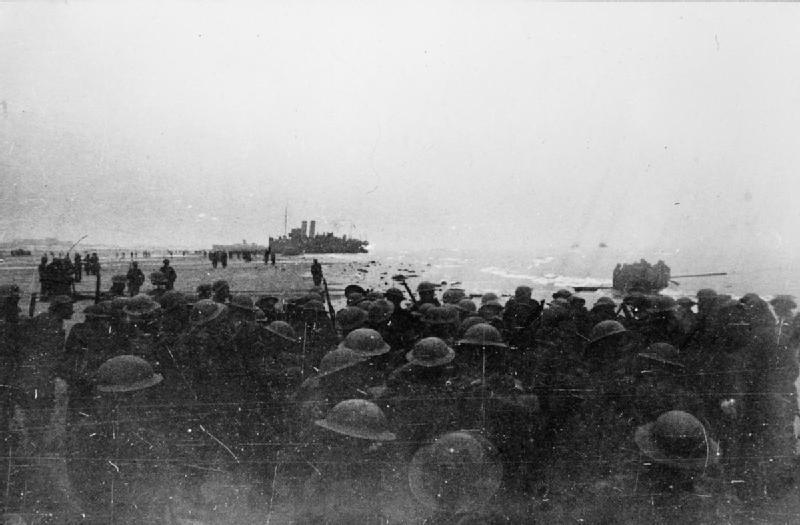
Hitler halts the panzers for two days (May 24–26)—the famous “Halt Order”—partly to conserve tanks, partly because Göring promised the Luftwaffe could destroy the pocket from the air. The halt gives the Allies time to organize the evacuation. From May 26 to June 4, Operation Dynamo rescues 338,226 men (198,000 British, 140,000 French and Belgian) from the beaches of Dunkirk, using everything from destroyers to fishing boats. The BEF survives but loses all its heavy equipment.
Hitler halts the panzers for two days (May 24–26)—the famous “Halt Order”—partly to conserve tanks, partly because Göring promised the Luftwaffe could destroy the pocket from the air. The halt gives the Allies time to organize the evacuation. From May 26 to June 4, Operation Dynamo rescues 338,226 men (198,000 British, 140,000 French and Belgian) from the beaches of Dunkirk, using everything from destroyers to fishing boats. The BEF survives but loses all its heavy equipment.
June 5–22 – Fall of France
With the north pocket eliminated, the Germans turn south. Case Red begins June 5. The French army—already exhausted, leaderless, demoralized—collapses. Paris was declared an open city on June 14. On June 16, Reynaud resigns; Pétain takes over. On June 22, France signed an armistice in the same railway carriage at Compiègne where Germany surrendered in 1918. The Third Republic dies. Vichy France is born.
With the north pocket eliminated, the Germans turn south. Case Red begins June 5. The French army—already exhausted, leaderless, demoralized—collapses. Paris was declared an open city on June 14. On June 16, Reynaud resigns; Pétain takes over. On June 22, France signed an armistice in the same railway carriage at Compiègne where Germany surrendered in 1918. The Third Republic dies. Vichy France is born.
Casualties & Consequences
- French: ~92,000 dead, 250,000 wounded, 1.9 million prisoners.
- British: ~68,000 casualties (mostly captured at Dunkirk).
- Belgian & Dutch: ~100,000 combined.
- German: ~27,000 dead, 111,000 wounded.
France fell in six weeks. The world watched in shock. The Maginot Line was bypassed. The “impregnable” French army was broken. Britain stood alone.

The Six Weeks That Changed Europe
The Fall of France was not inevitable. It was the result of strategic surprise, superior coordination, ruthless speed, and French paralysis. The Allies expected a replay of 1914; the Germans delivered something new. Manstein’s plan was brilliant; Guderian’s execution was flawless. But the halt order at Dunkirk, the failure to press the advantage, and the political decision to stop in 1940 all show that even Blitzkrieg was not perfect.
In 2026, when people walk through the preserved bunkers at Sedan or stand on the beach at Dunkirk, they feel the speed of the collapse. France—the nation that had held Germany for four years in 1914–1918—fell in six weeks because it was mentally and doctrinally still fighting the last war.
What part of the Fall of France stays with you?
The panzers threading through the “impassable” Ardennes?
The moment Guderian reached the Channel and cut off the Allies?
The miracle of Dunkirk that saved the BEF?
Or the chilling speed with which one of Europe’s greatest armies simply ceased to exist?
The panzers threading through the “impassable” Ardennes?
The moment Guderian reached the Channel and cut off the Allies?
The miracle of Dunkirk that saved the BEF?
Or the chilling speed with which one of Europe’s greatest armies simply ceased to exist?
Write whatever is on your mind below. I read every word.
Books that shaped how I see the Fall of France:
- The Fall of France by Julian Jackson (the definitive modern account)
- To Lose a Battle: France 1940 by Alistair Horne (classic narrative)
- Strange Defeat by Marc Bloch (written in 1940 by a French historian who fought in the campaign—raw and personal)
- The Collapse of the Third Republic by William L. Shirer (detailed political and military collapse)
- Blitzkrieg by Len Deighton (focus on the German tactics)
Reliable sources I leaned on for key facts:
- Service Historique de la Défense – Campagne de France 1940 (French military archives)
- Bundesarchiv – Westfeldzug 1940 (German war diaries & orders)
- Imperial War Museums – Fall of France (photos, oral histories, maps)
- Britannica – Battle of France
- The National Archives UK – Dunkirk & Fall of France
Recommended Articles
- The Lightning War That Erased Poland from the Map – The Blitzkrieg that was later used against France.
- Neville Chamberlain and the Deal That Failed to Stop Hitler – The appeasement policy that left the Allies vulnerable.
- Winston Churchill: The Reckless Politician Who Became Britain’s Wartime Hero – The leader who rose during the Dunkirk crisis.
- The Battle of Britain: When Hitler Failed to Conquer the Skies – Britain’s fight for survival after France fell.
- Erwin Rommel: The Desert Fox Who Outmaneuvered the British – The German commander who excelled in the French campaign.


Comments